By IFV
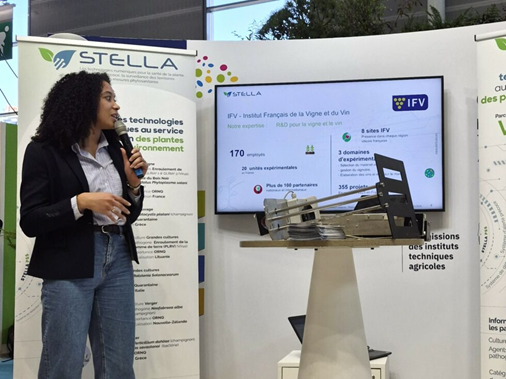
On the occasion of the 62nd edition of the International Agricultural Show, the ACTA (Association of Technical Agricultural Coordination) and the ITA (Agricultural Technical Institutes) came together to share their expertise, showcase agronomic innovation, and encourage discussion with all stakeholders in the agricultural sector. Within this framework, IFV (French Wine and Vine Institute), the leading technical institute for viticulture in France, took part by presenting two different projects, including the STELLA project.
IFV and Acta: Digital Technologies Serving Epidemiological Surveillance – A Viticultural Use Case in Alsace (European STELLA Project)
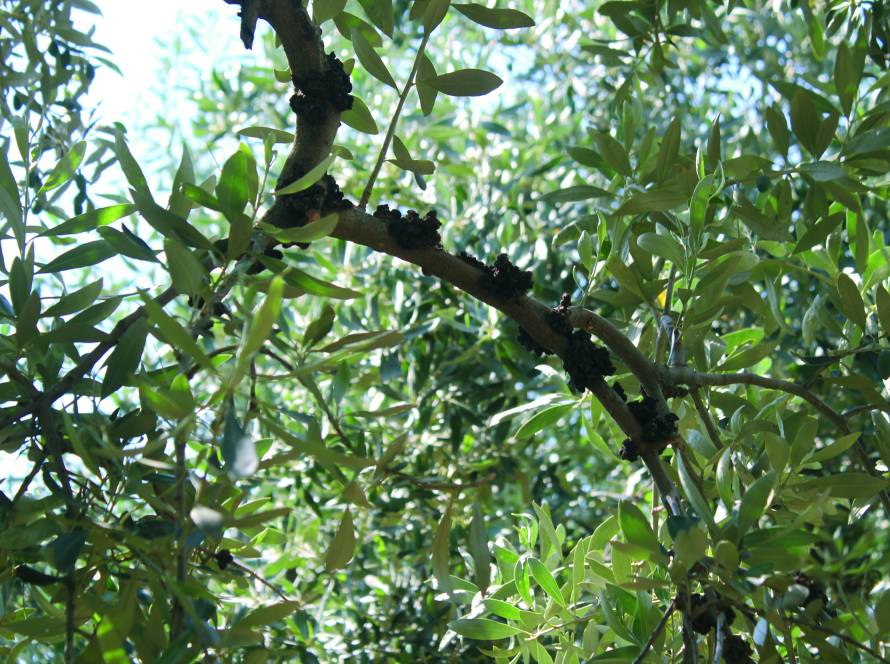
On Thursday, February 26, IFV presented the European STELLA project, which aims to develop a digital platform for epidemiological surveillance, early detection, and early warning of quarantined and regulated pests and diseases. In 2024, a pilot project was launched on vineyard plots in Alsace. The objective is to test digital technologies for monitoring bois noir and grapevine leafroll disease, both of which are responsible for significant vine decline in the region and across France.
Epidemiological Surveillance: The Challenges of Large-Scale Organization
Epidemiological surveillance refers to the organized and continuous monitoring of crop diseases and pests in order to detect threats early, assess their level of risk, analyse their dynamics, and anticipate their short- and long-term impacts. It represents a strategic issue for farmers, as it helps preserve yields while reducing the use of plant protection products.
Currently, the monitoring of regulated and quarantine pests relies on coordinated action within observation networks involving government services, research organizations, technical institutes, and agricultural professionals. This monitoring is mainly based on traditional methods such as field observations and trapping. While these methods are effective, they have limitations, particularly due to the time required and the irregularity of observations, which only reflect conditions at a given moment. With increasing international trade and the effects of climate change, the risk of disease and pest emergence and spread is growing. To be effective, control strategies must therefore be designed and implemented at an international scale.
The European STELLA Project: Development of a Connected Platform
Digital technologies are emerging as a promising solution: remote sensing, proximal sensing, connected sensors, and artificial intelligence make it possible to enhance threat monitoring and deploy it on a large scale. The STELLA project, funded with €4.9 million under the Horizon Europe program, began in 2024 for a four-year period and brings together fourteen partners in six countries: Greece, Lithuania, Italy, Austria, New Zealand, and France.
The project is based on the creation of a platform comprising three subsystems: an Early Warning System (EWS) for early detection, relying on Internet of Things (IoT) sensors and forecasting models; a Pest Detection System (PDS), based on remote sensing and connected traps; and finally a Pest Response System (PRS), which uses collected data to alert plant health authorities and advise farmers on management measures.
The platform is currently at the prototype stage. Claire Ortega, a research engineer at ACTA in charge of the platform’s development, explains that several versions of the platform are currently being evaluated and refined, particularly from an ergonomic perspective.
IFV launches the first vineyard trials in 2024 in the Alsace region
At the same time, IFV initiated the deployment of the STELLA Use Case Pilot (UCP) in the Alsace region, with the aim of assessing the contribution of digital technologies to monitoring bois noir and grapevine leafroll virus, two regulated but non-quarantine diseases responsible for significant damage in the Alsatian vineyard. Séverine Coubard, an engineer at IFV and regional coordinator of the project, specifies that the experimental setup consists of eight plots representing a total surface area of 3.6 hectares.
Several technologies have been deployed since 2024: connected weather stations to record climatic conditions; connected traps to monitor insect vectors of the diseases; an onboard camera coupled with a GPS system to collect georeferenced images of foliar symptoms of bois noir and grapevine leafroll; as well as drone flights conducted at an altitude of approximately ten meters above the vineyards to test new models capable of automatically detecting disease symptoms from remote sensing images.
However, the first two years were marked by several challenges, particularly variable weather conditions, which at times limited image acquisition during the optimal period of symptom expression, with symptoms themselves remaining difficult to identify accurately.
Despite these challenges, the outlook remains promising. A thorough analysis of the data collected over previous years is scheduled for 2026, while artificial intelligence models will be refined through the integration of more than 1,500 images already acquired. Ultimately, the tools developed in Alsace are intended to be connected to the platform prototype in order to centralize data and facilitate information sharing among partners.
Although the countries involved in the project are working on different issues, the initial results obtained in vineyards in Alsace are encouraging, as they provide valuable experience in data collection and protocol development, with the ambition of ultimately building a cross-cutting and standardized methodology. This case study thus illustrates how the complementarity between viticultural expertise and digital technologies can contribute to more precise, responsive, and sustainable grapevine disease surveillance, supported by strong collaboration, which is essential to the success of this European project.