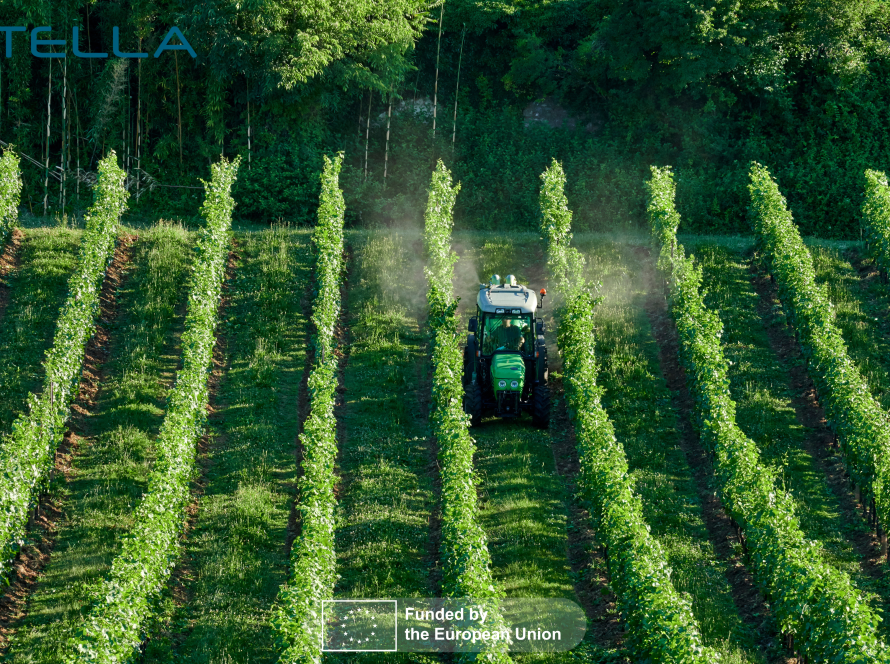
STELLA, together with fellow Horizon Europe projects FORSAID and CERBERUS, has contributed to a new joint factsheet highlighting shared priorities, complementary technologies and opportunities for collaboration in plant health protection.
Funded under the same Horizon Europe call, the three projects address different aspects of pest and pathogen surveillance across agricultural and forest environments, while sharing a strong focus on early detection, monitoring and the use of digital technologies. The factsheet brings these connections together and provides an accessible overview of how the projects’ approaches complement one another.
For STELLA, this collaboration reflects the project’s broader work towards more integrated and data-driven plant health surveillance. Through the STELLA Schädlingsüberwachungssystem (PSS), the project brings together a range of tools including satellite and remote sensing, proximal sensing technologies, IoT sensors, smart insect traps, AI-based pest detection and prediction models, and crowdsourcing approaches.
These technologies are designed to support the early detection of regulated pests and pathogens and strengthen the flow of information needed for timely and targeted responses.
The joint factsheet also demonstrates how STELLA’s work connects with the complementary activities of FORSAID and CERBERUS.
FORSAID focuses on forest health, using technologies such as satellite remote sensing, proximal sensing, automated trapping and citizen science to support the detection and monitoring of forest pests and pathogens.
CERBERUS, meanwhile, works on pest surveillance in Mediterranean agriculture, combining remote and proximal sensing, ground-based technologies and smart management approaches.
Beyond the individual technological solutions, the three projects share several broader areas of interest, including plant health monitoring, digital and smart technologies, stakeholder engagement, capacity building and stronger exchange between researchers, practitioners and policymakers.
This shared ground creates valuable opportunities for cooperation across different fields of expertise. By exchanging methods, experiences and research outputs, STELLA, FORSAID and CERBERUS can strengthen links between agricultural and forest plant health research while contributing to a more connected European approach to surveillance and early detection.
The factsheet also reflects the diversity of stakeholders involved in this work, including researchers and technicians, farmers and forest owners, practitioners, citizen scientists, decision-makers and policy bodies.
For STELLA, collaboration with related European research initiatives is an important part of building stronger connections between technological development, scientific knowledge and practical plant health needs.
Explore the joint factsheet to learn more about STELLA, FORSAID and CERBERUS, their focus areas and the technologies they are developing for plant health surveillance across Europe.